EN / FR
Skip to main content

Rhodes Chroma

Available for use in Recording Studios
Not currently on exhibit
Artifact TypeSynthesizer
Designer ARP Instruments, Inc. electronic instruments manufacturer | founded 1969
Manufacturer LocationUSA, North America
Datec. 1982
This synthesizer was once owned by B.C.-born session musician and composer Ralph Grierson, who worked on the soundtracks of dozens of films, including Field of Dreams and The Matrix. A hybrid synth, the Chroma’s sound-producing components are mainly analog, but it also uses integrated circuits that give the player greater system control. Presaging future digital synths, it also features sliders in place of knobs and buttons. Both Herbie Hancock and Oscar Peterson were fans of the instrument.
Operation/FunctionThe Rhodes Chroma is a digital-analog synthesizer that features sixteen-voice polyphony across its 64-note chromatic keyboard. There are sixteen voltage-controlled oscillators on board with variable pulse and sawtooth waveforms, capable of functioning as modulation sources and low frequency oscillators. Other features include switchable high- and low-pass filters, and a voltage-controlled amplifier with ADSR envelope. The keyboard is weighted with optional polyphonic aftertouch. Programmable memory capability spans fifty patches that may be saved to an external cassette tape via a built-in interface.Cultural SignificanceUnfortunately, the Chroma is not well known among general synthesizer enthusiasts, partly on account of its obscurity and relative lack of popular usage in comparison to units such as the ubiquitous Prophet 5. That being said, however, its unique interface stands as an early example of the extent to which musical instruments and computers could interact beyond the protocols of the now-standard MIDI.Technological SignificanceThe synthesizer is arguably one of, if not the most technologically significant contributions to the course of electronic music. Although earlier electronic instruments such as the Theremin, Clavivox, and Ondes Martenot offered new and unique ways of articulating sound, their sonic template was, for the most part, quite limited, capable of producing only a few distinct timbres. The modern synthesizer, on the other hand, was viewed as an integrated electronic orchestra, as it were, allowing the user to sculpt a wide and varied array of tones and gestures. What’s more, it allowed the user to modify their sounds in real time, seemingly without the sorts of physical limitations imposed on acoustic instruments. Of course, each instrument did come with its own characteristic tonal qualities and control limitations, however the wealth of opportunity inherent in the ability to manipulate and define nearly every parameter of sound structure solidified the synthesizer’s place as one of the most powerful musical innovations of the twentieth century. The concept of modular design was initially quite desirable to professional and studio musicians in that it allowed one to more or less completely customize their instrument and modify its functions as desired. Although modular-type systems are still in production today ¬– the Buchla 200e, for instance, is based on the modular design of the Buchla 200 analog system – the advent of affordable eight-bit microprocessor-based integrated circuitry in the mid 1970s and the rise of programmable polyphonic instruments in the late 1970s resulted in the relative obsolescence of the discrete transistor-based systems of the early 1970s. Synthesizers increasingly began to adopt the smaller, more compact aesthetic exhibited in these performance-oriented instruments, especially that of the revered Minimoog. The once popular modular approach gave way to more streamlined designs that, while still offering users the ability to control numerous aspects of the instrument’s tone and gesture, limited the way in which the instrument could be operated. Although the modular synthesizer was highly regarded for its flexibility, it was also criticized for being largely unintuitive and cumbersome in its patching schemes; the smaller, integrated digital-analog hybrids of the late 1970s, such as the Sequential Circuits Prophet 5, though still not relatively inexpensive, responded more readily to the technological demands of an increasingly burgeoning consumer market. In the early 1970s, integrated circuits emerged in synthesizers, housing the many discrete components of transistor-based circuits within a single silicon chip, as they are often called. Integrated circuits were significantly smaller and less expensive to manufacture than the circuits from which they derived. With the introduction of the first affordable eight-bit microprocessors in the mid 1970s, such as the Zilog Z80, integrated circuits adapted to incorporate more sophisticated digital components. The Rhodes Chroma belongs to the era of synthesizers that incorporate microprocessor-based integrated circuits. In addition to being more reliable and less expensive to manufacture, the synthesizers of the microprocessor era were, to varying extents, also programmable, meaning that various parameters could be stored either within the instrument’s internal memory or onto an external device. Synthesizers that emerged from the era of digital-analog hybrids are often considered to represent the height of synthesizer design; combining analog sound production with reliable and flexible digital control. Throughout the 1980s and 1990s, synthesizers continued to develop following the compact, user-friendly model established in the mid 1970s. These instruments, however, generally moved away from the hybrid internal architecture to incorporate full digital control, computer-based tone generation, and digital signal processing, such as in the iconic Yamaha DX7 of 1983. The Chroma holds a unique place within the realm of digital-analog hybrid synthesizers in that it features many unique expansions to the already groundbreaking controls of units from the late 1970s such as the Prophet 5, such as sixteen-voice polyphony, a weighted keyboard, an on board graphic equalizer, arpeggiators, and elements of digital sound generation and modification as well as control. Unfortunately, the Chroma suffered as a result of timing; its sleek, minimalist interface proved too radical for a generation of synthesists accustomed to a series of knobs and buttons, and its powerful modulation tools and ability to interface with a computer were soon eclipsed by the introduction of the first MIDI-equipped instruments of the early 1980s.Users/PerformersThis particular artifact was formerly owned by Canadian session musician, performer, and composer, Ralph Grierson. Grierson was born in New Westminster, near Vancouver, British Columbia on 23 June 1942. He received bachelors and masters degrees in music from the University of Southern California in 1966 and 1968, respectively. Prior to his relocation to California, Grierson studied with numerous notable teachers in Vancouver, performed twelve separate times with the Vancouver Symphony Orchestra, and appeared on appearing on CBC radio programs such as Sound of the 60s and Chorus Gentlemen. Grierson settled in Los Angeles following the completion of his studies in 1968, and led a successful career as both a studio musician for television and film, performing keyboard parts on piano, organ, and harpsichord, and as an active performer of contemporary music, often appearing with the Los Angeles Philharmonic. He has contributed to the soundtracks of hundreds of motion pictures and television shows including The Horse Whisperer (1998), The Matrix (1999), Fantasia/2000 (1999), and Monsters, Inc. (2001), and remains a regular collaborator with composer James Horner.
Object number2003.02.02
Photo credit: Don Kennedy
CBS Musical Instruments
c. 1982
Available for use in Recording Studios
On View: Not currently on exhibit
isVirtual:
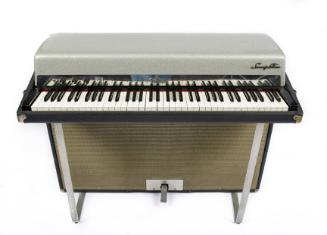
Photo credit: Don Kennedy
CBS Musical Instruments
1966
Available for use in Recording Studios
On View: Not currently on exhibit
isVirtual:
Photo credit: Meghan MacKrous, courtesy of the National Music Centre
CBS Musical Instruments
c. 1980
Available for use in Recording Studios
On View: Not currently on exhibit
isVirtual:
Photo credit: Don Kennedy
ARP Instruments, Inc.
1972
Available for use in Recording Studios
On View: Not currently on exhibit
isVirtual:
Photo credit: Don Kennedy
Framus (Franconian Musical Instruments Manufacture)
20th Century
Not available for use in Recording Studios
On View: Not currently on exhibit
isVirtual:
Photo credit: Don Kennedy
Chamberlin Instruments Company, Inc.
1970
Not available for use in Recording Studios
On View: On exhibit
isVirtual:
Photo credit: Don Kennedy
Chamberlin Instruments Company, Inc.
1979
Available for use in Recording Studios
On View: Not currently on exhibit
isVirtual:
Photo credit: Don Kennedy
Maurice Louis Eugène Martenot
1975
Available for use in Recording Studios
On View: Not currently on exhibit
isVirtual:
Photo credit: Meghan MacKrous, courtesy of the National Music Centre
Therevox Custom Musical Instruments
2014
Available for use in Recording Studios
On View: Not currently on exhibit
isVirtual:
Photo credit: Don Kennedy
Kay Musical Instruments
20th Century
Not available for use in Recording Studios
On View: On exhibit
isVirtual:
Photo credit: Don Kennedy
Kazuo Yairi for CBS Masterworks
20th Century
Available for use in Recording Studios
On View: Not currently on exhibit
isVirtual:
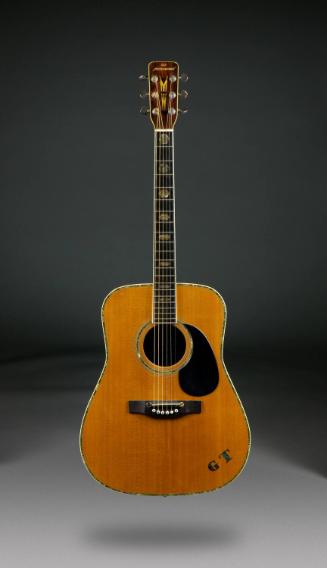
Photo by Don Kennedy
CBS Masterworks
20th Century
Not available for use in Recording Studios
On View: Not currently on exhibit
isVirtual:
Back