EN / FR
Skip to main content

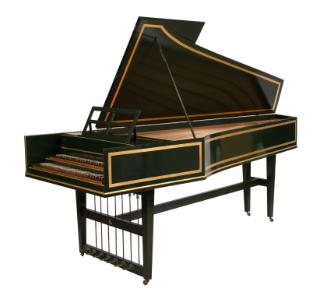
Greta Kraus Harpsichord

Not available for use in Recording Studios
Not currently on exhibit
Artifact TypeHarpsichord
Manufacturer Kurt Wittmayer
Manufacturer LocationGermany
Date1954

This “revival” harpsichord was custom-made by renowned German builder Kurt Wittmayer for Canadian harpsichordist Greta Kraus. A native of Austria, Kraus immigrated to Canada in 1938—where she taught at the Royal Conservatory of Music and was a founder of the Toronto Baroque Ensemble. She also helped popularize the revival harpsichord, a recreation of earlier historical instruments that employed early 20th-century piano-building techniques and materials.


On loan from Library and Archives Canada
Prêt de Bibliothèque et Archives Canada

Operation/FunctionThis particular artifact features a keyboard compass of FF-fff across a double manual and five rows of jacks with a string disposition of 1 x 16’, 1 x 8’, 1 x 8’, 1 x 8’, and 1 x 4’. String disposition refers to the number of sets of strings present in a harpsichord; as such, this particular harpsichord contains one 16’ set of strings, three separate 8’ sets of strings, and a 4’ set of strings. Registration of the instrument can be controlled by the player, and is accessed via seven pedals with ½ stops.Cultural SignificanceRevival harpsichords enjoyed a great deal of success during their period of manufacture. Although there was a degree of antagonism, so to speak, present between the builders of revival instruments and proponents of historical instruments, revival harpsichords were quite regularly used by those interested in the new sonic and practical possibilities these alternative versions could offer. A number of contemporary composers and performers sought to exploit the unique features of revival harpsichords, which were not present in historical examples, in order to endow the instrument with a new and expanded repertoire. During the twentieth century, revival harpsichords continued to develop, with many builders offering new modifications or additions, and some even being custom built to a particular performer’s specifications. The instrument was popularized by its many devoted users, the most notable of which was Polish-French harpsichordist Wanda Landowska, and has been featured on a number of professional recordings. Currently, the cultural and monetary value of revival harpsichords has declined with the end of their manufacture.Technological SignificanceThe technological basis of revival harpsichords is rooted in an interest to construct new and modern examples of an historic instrument. Historically, the harpsichord was itself an innovative instrument that offered keyboard players a more practical alternative to instruments such as the organ and clavichord, as well as a new sound. The history of the instrument is not well documented, but it is generally agreed to have originated from the psaltery, a stringed instrument that uses a similar plucking mechanism as the harpsichord. The harpsichord gained notoriety throughout the sixteenth, seventeenth, and most of the eighteenth centuries, and reigned as the predominant keyboard instrument of the Baroque era. Although the piano, which offered keyboard players a more expressive tone and touch than the harpsichord and a louder sound than the clavichord, was invented in 1700, it was not until the very end of the eighteenth century that the instrument, in its early instantiation as the fortepiano, began to eclipse the harpsichord. The piano remained the predominant keyboard instrument throughout the nineteenth century while the harpsichord faded into relative obscurity. In the late nineteenth and early twentieth centuries, however, several piano manufacturers, most notably the Paris-based Érard and Pleyel, began producing new examples of the instrument. Given their initial production in piano factories, these “revival” harpsichords employed certain elements and components of early twentieth-century piano building, such as a heavier metal frame and a 16’ rank of strings to bolster the sound, resulting in them being more durable and offering a range of new timbres. Builders who followed in this practice continued to experiment with the design, applying significant additions and modifications to the historical design. Although revival harpsichords are not considered historically accurate, they do share the same basic plucking mechanism for sound production. In the mid twentieth century, the early music revival produced a number of builders who supported a return to the creation of historically accurate instruments, basing their design principles and materials of construction on those historical models and writings still in existence. As such, two schools of thought regarding harpsichord building emerged mid century. Revival harpsichords were lauded for their durability and depth of tone, which is often regarded as being richer than in historical instruments, though the majority of well-built historical harpsichords are capable of producing a very lush tone quality. Revival harpsichords remained in development until the end of the twentieth century, and by mid century, manufacture of these instruments had become focused in Germany, with the majority of factories and workshops dedicated to the construction of revival harpsichords founded by either German-born or German-based builders. While historic harpsichords found extensive usage in the historically informed performance techniques of early and Baroque music, revival harpsichords found a particular niche with contemporary composers who were curious about exploring the new potentials and timbres of this reinvented instrument. Basic differences between revival and historic harpsichords include, among many others: solid construction and larger proportions in the former, and thinner proportions in the latter; plywood or chipboard panels and veneered exterior in the former, and hand-painted solid wood throughout with highly decorative designs or images in the latter; heavy cases with rigid internal bracing and occasionally featuring metal frames in the former, and thinner cases that never feature metal frames and have a relatively lighter bracing for string tension in the latter; thicker soundboard that is often laminated in the former, and a thinner wooden soundboard that is often decorated in the latter; coupling and registration via pedals in the former, and via levers attached to the name board in the latter; bone, quill, or leather plectra in the former, and typically Delrin plectra in the latter; yellow brass strings or overspun strings in the bass and hard steel strings in the treble in the former, and red and yellow brass strings in the bass and soft iron wire strings in the treble in the latter; and, less even stringing, bulkier music stands and lid sticks, more secure fallboard, larger compass, more complicated jacks and larger dampers, more varied disposition that often includes a 16’ rank of strings, larger hitch pins and nut pins, and slightly wider and heavier keys, similar to those of a piano, in the former. Moreover, revival harpsichords were typically mass produced in factories and contained serial numbers, whereas historical harpsichords were made in low production, often just as individual examples of a particular design. Revival harpsichords were also extended into the realm of electricity, with several builders producing electric versions that replaced the soundboard with a set of magnetic pickups. Although revival harpsichords are no longer in production and the so-called “authentic” harpsichords built in the historical tradition are more commonly seen, revival harpsichords enjoyed a period of time in which the instrument was capable of offering new timbral possibilities and approaches to modern performance.Users/PerformersThis particular revival harpsichord was formerly owned by the Austrian-Canadian harpsichordist, Greta Kraus. Greta Kraus was born in Vienna, Austria on 3 August 1907 and relocated to Canada in 1938, becoming a naturalized citizen in 1944. Kraus studied at the Vienna Academy of Music from 1923 until 1930, receiving a Music Teacher’s Diploma upon completion of her studies. Between 1924 and 1931, Kraus studied analysis, history, and piano performance with Hans Weisse and, between 1931 and 1934, she studied analysis with the famed music theorist, Heinrich Schenker, contributing to his Five Graphic Music Analyses her analysis of Chopin’s Étude in F major, Op. 10, No. 8, as well as several other graphs that appeared in his New York seminars prior to 1934. She gave her first solo concert as a harpsichordist in 1935 at a lecture and recital for the Bach Society of Vienna, and made her debut as an ensemble player in 1936, performing in an eight-instrument version of Bach’s Musical Offering (BWV 1079), which was conducted by Hermann Scherchen. She also performed with the Boyd Neel Orchestra in London in 1937, which was broadcast by the BBC. Upon her arrival to Canada in 1938, Kraus initially settled in Hawkesbury, Ontario and then relocated in 1939 to Toronto after receiving an offer to teach at Havergal College. Shortly after arriving in Toronto, Kraus asserted her position as a leading soloist, chamber musician, accompanist, and teacher, specializing in Baroque harpsichord performance and German lieder. She performed in duo with the harpsichordist Arnold Walter, and was broadcast both in concert and in recordings by the CBC. One of Kraus’ most notable collaborations was with the Canadian flutist and composer Robert Aitken, with whom she performed in the Aitken-Kraus Duo between 1964 and 1986, who also composed works with her specific instruments in mind. Kraus taught harpsichord, piano, accompanying, and Baroque performance practice at the Royal Conservatory of Music between 1943 and 1969, the University of Toronto between 1963 and 1976, and privately since 1939, with pupils including composer R. Murray Schafer, soprano Teresa Stratas, harpsichordist Douglas Bodle, bass-baritone Ingemar Korjus, vocal teacher Mary Morrison, and pianist Jane Coop. Additionally, she also served as the director of the Collegium Musicum for the schooling of advanced faculty students in the performance style of the Baroque, and offered master classes at the Banff Centre for the Arts, the Shawnigan Summer School of the Arts, and at several universities. Kraus also founded the Toronto Baroque Ensemble, which consisted of Elizabeth Benson Guy (soprano), Nicholas Fiore (flute), Donald Witton (cello), and Corol McCartney (violin). The ensemble was active from 1958 until 1963 and greatly helped pioneer the development of an early music community in the city. Between 1942 and 1956, Kraus performed the continuo for Bach’s Messiah, St. Matthew Passion (BWV 244), St. John Passion (BWV 245), and Mass in B Minor (BWV 232) under the direction of Sir Ernest MacMillan at Massey Hall. Although initially trained as a pianist and then later as a harpsichordist, Kraus focused much of her career on the performance techniques of the latter, though she still occasionally appeared as a pianist in chamber ensembles. She was a prominent advocate of revival harpsichords, and helped to promote their significance as an instrument capable of catering to both historical performance methods and the creation of new music. As such, Kraus was a skilled performer of both Baroque music and contemporary harpsichord music. Kraus was revered for her ability to reinterpret Baroque music through her instruments, and had most of the revival harpsichords she performed on custom built to her specifications. Her instruments were particularly known for offering a warmth and resonant depth of tone that is not typically present in most historical harpsichords on account of inherently “thinner”, so to speak, construction. Kraus was the recipient of numerous awards, including a citation in 1973 from the Ontario Confederation of University Faculty Association for outstanding contributions to university teaching, a Toronto Arts Award in 1990, the Order of Ontario in 1991, and the Order of Canada in 1992. Kraus passed away in Toronto on 30 March 1998.
Object numberL.2016.14.02
Photo credit: Don Kennedy
Eric Herz
1976
Not available for use in Recording Studios
On View: Not currently on exhibit
isVirtual:
Photo credit: Don Kennedy
Hendrik Anthonie Meijer
1785
Not available for use in Recording Studios
On View: Not currently on exhibit
isVirtual:
Photo credit: Meghan MacKrous, courtesy of the National Music Centre
Moog Music, Inc.
2001
Available for use in Recording Studios
On View: Not currently on exhibit
isVirtual:
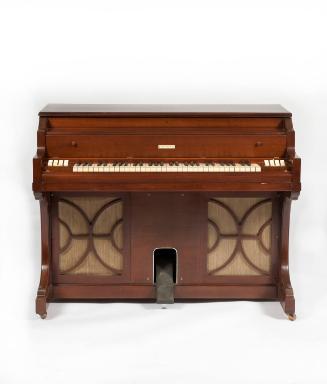
Photo credit: Don Kennedy
Everett Piano Company
1935
Not available for use in Recording Studios
On View: Not currently on exhibit
isVirtual:
Photo credit: Don Kennedy
Jim Henson’s Creature Shop
2011
On View:
isVirtual:
Photo credit: Don Kennedy
Garnet "Gar" Gillies
Available for use in Recording Studios
On View: Not currently on exhibit
isVirtual:
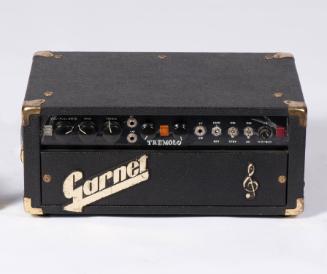
Photo credit: Don Kennedy
Moog Music, Inc.
1973
Available for use in Recording Studios
On View: Not currently on exhibit
isVirtual:
Photo credit: Meghan MacKrous, courtesy of the National Music Centre
R.A. Moog, Inc.
1970
Available for use in Recording Studios
On View: Not currently on exhibit
isVirtual:
Photo credit: Don Kennedy
E-mu Systems, Inc.
About 1973
Available for use in Recording Studios
On View: Not currently on exhibit
isVirtual:
Photo credit: Don Kennedy
Garnet "Gar" Gillies
Available for use in Recording Studios
On View: Not currently on exhibit
isVirtual:
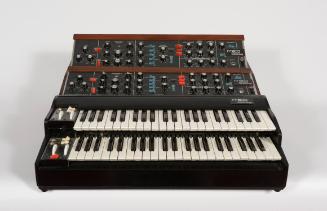
Photo credit: Meghan MacKrous, courtesy of the National Music Centre
Bode Sound Company
1977
Available for use in Recording Studios
On View: Not currently on exhibit
isVirtual:
Bösendorfer Klavierfabrik GmbH
1855
Not available for use in Recording Studios
On View: Not currently on exhibit
isVirtual:
Back